Chimney Flashing Repair in Owasso, OK
The flashing around a chimney is the single most common place a roof leaks. A local roofer rebuilds the step-and-counter flashing that seals the chimney to the roof properly, documents it, and does not just caulk over the old metal and hope.
Why the chimney is the usual leak
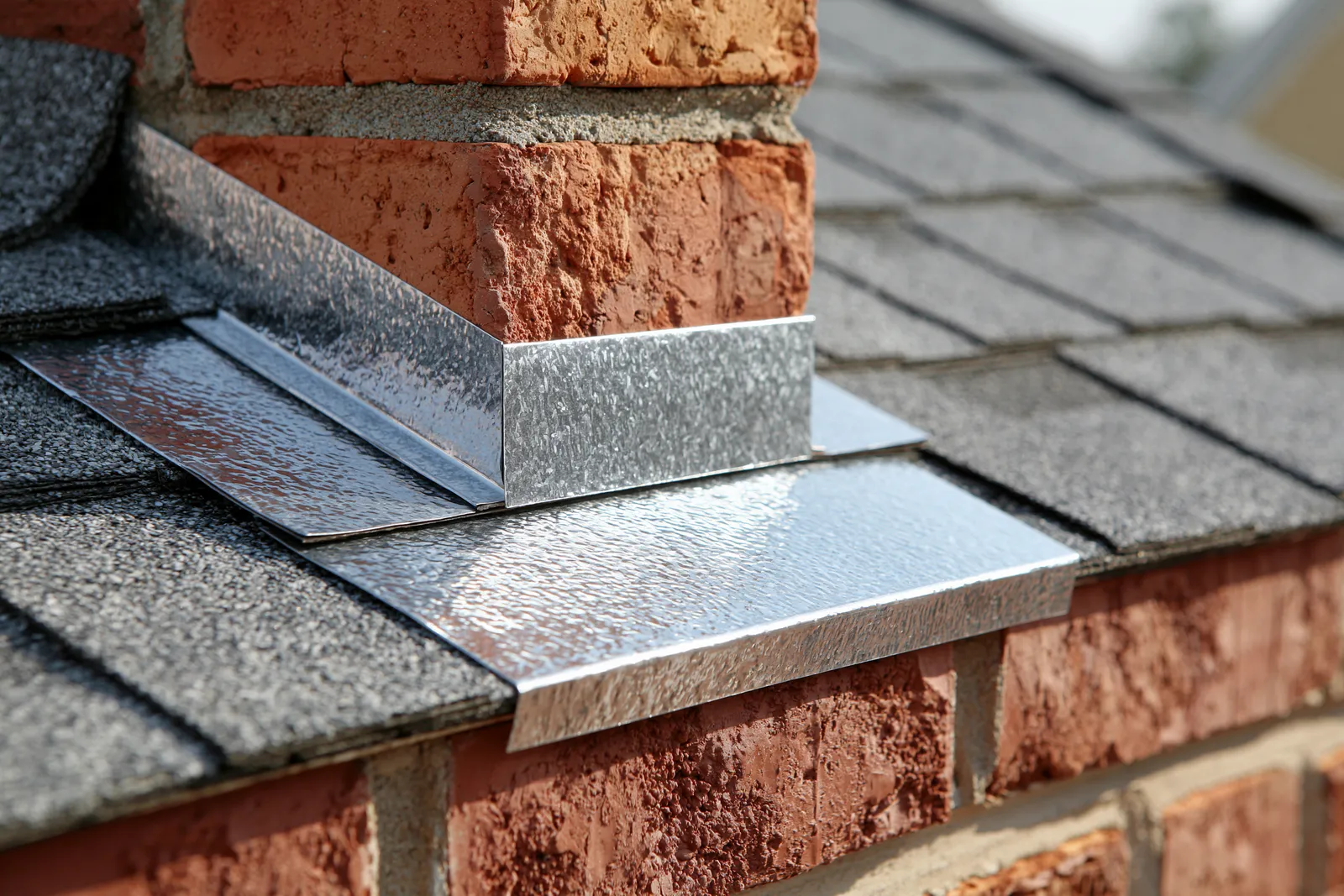
A chimney punches straight through the roof, so the metal that seals it, the flashing, is doing the hardest job on the roof, and the large majority of chimney leaks come from that flashing rather than the brick or the roof field. Done right, it is a two-part system: step flashing woven in piece by piece alongside the shingle courses up the sides, and counter flashing set into the chimney and lapped over the step flashing so the joint can move without opening a gap.
The shortcut, and the reason so many chimneys leak, is a bead of caulk or roofing tar smeared over the seam instead. Caulk dries, cracks, and lets water in within a couple of seasons. Our roofers rebuild the flashing the right way, not caulk it, and document the detail, because a chimney sealed properly is a chimney that stops being the leak everyone chases. If the water has already worked in, it often ties into a wider leak repair.
What chimney flashing work actually covers
The metal a local roofer rebuilds around a chimney, done as a system.
- 01Step flashing up the sides
- Rectangular pieces bent and woven in step by step alongside the shingle courses, each lapping the one below, so water is carried across the wall-to-roof seam instead of into it.
- 02Counter flashing into the chimney
- The upper piece is set into the chimney and lapped over the step flashing, so the joint sheds water and can move with expansion without opening a gap, the part a caulk patch skips.
- 03The saddle or cricket above
- On a wider chimney, the roofer checks whether a cricket is needed to split water around the up-slope side rather than letting it pond against the brick.
- 04No caulk-and-hope
- Where a prior job just smeared caulk or tar over the seam, that gets removed and replaced with real flashing, not sealed over again.
A stain near a chimney is worth a free inspection before it works into the decking around the opening.
How chimney flashing work goes, in order
Read the leak, rebuild the two-part flashing, prove it sheds, each step on the record.
Find where it gets in
A local roofer traces the leak at the chimney, reads whether the step flashing, the counter flashing, or a missing cricket is the culprit, and photographs it so the cause is shown.
Rebuild the flashing
The step and counter flashing are rebuilt as a proper two-part system, not caulked over, with the written price set before the work begins.
Confirm it sheds
The rebuilt flashing is checked so water is carried across the seam and off the roof, and the finished detail is documented in the estimate.
Signs your Owasso chimney is leaking
The tells that the flashing, not the brick, is the problem.
- A stain on a ceiling or wall near the chimney after a rain
- Rusted, lifted, or visibly caulked-over flashing at the chimney base
- Damp or a musty smell in the attic around the chimney chase
- Crumbling mortar where the counter flashing should be set in
- Daylight or a gap visible where the roof meets the chimney
A chimney leak rarely fixes itself and usually spreads to the decking; a free look reads the flashing before it does.
What chimney flashing runs
Chimney flashing is a targeted repair, not a roof replacement, and the ranges stay sensible: resealing loose flashing often runs $150 to $250, most flashing repairs sit roughly between $200 and $600, and a full step-and-counter rebuild around a chimney commonly lands at $600 to $1,000 or somewhat more once mortar work or a cricket joins the scope. Treat those as national figures, not your quote. What nobody should pay for twice is a caulk patch that fails within a season, which is why a local roofer rebuilds the detail properly and puts the number in writing before the work starts. The cost guide frames the bigger ranges if the roof around the chimney is near the end of its life.
See honest cost ranges- Resealing loose flashing often runs $150 to $250
- Most flashing repairs sit roughly between $200 and $600
- A full step-and-counter rebuild commonly runs $600 to $1,000 and up
- Mortar work or a cricket adds to the scope, priced in writing first
What Owasso chimneys tend to need
Plenty of Owasso homes have a masonry chimney, and the flashing is often the first detail to give out, well before the shingle field. Oklahoma sun dries out any caulk a prior job leaned on, hard rain finds the gap, and the freeze-thaw swings work the mortar the counter flashing sets into. A roofer reads the chimney as a two-part flashing system rather than a spot to re-caulk, since a proper rebuild is what turns a recurring chimney leak into a solved one.
- 01Aging flashing on mid-life roofs
- On Owasso roofs past fifteen or twenty years the chimney flashing hardens and pulls away, becoming a leak long before the shingles wear out.
- 02Caulk that a prior job leaned on
- Many chimneys were sealed with a caulk shortcut that the Oklahoma sun has since cracked, which is why the leak keeps coming back until the flashing is rebuilt.
- 03Freeze-thaw on the mortar
- Oklahoma temperature swings work the mortar joint the counter flashing sets into, so the roofer checks the brick and the metal together.
Chasing a chimney leak that keeps returning? It often ties into a wider roof leak repair, which traces the water to its real source.
Chimney flashing questions
What Owasso homeowners ask about a leaking chimney.
Why does my chimney leak?
Can chimney flashing just be re-caulked?
What is step and counter flashing?
Is a chimney leak covered by insurance?
How much does chimney flashing repair cost?
Get your Owasso chimney flashing documented, free
Open a file with Owasso Roofing Co on that chimney leak. A local roofer traces it, rebuilds the step-and-counter flashing the right way, and hands you one written number. No caulk-and-hope, no hurry to decide.
The workmanship goes in writing, with the exact guarantee and warranty terms confirmed in your written estimate.
Tell us where the stain shows and a local roofer follows up the same day to read the chimney.